
Jeremiah 5:28, ESV
We are pretty good at keeping up appearances. Most of us have learned how to look put-together even when things are falling apart inside. We smile at the right moments, say the right things, show up when we’re supposed to. And the world rewards that. A polished image opens doors that a messy, honest one sometimes doesn’t.
Jeremiah knew this problem well. During his ministry, he was surrounded by people who had mastered the outside while neglecting everything underneath. They went through the motions. They kept the forms. But their hearts, as God saw them, were given over to wickedness. Through chapters 4 through 6, God warned Judah repeatedly, calling them back, pleading with them to repent before destruction came. The tragedy wasn’t that they were strangers to God. It’s that they thought they were fine.
Sadly, this didn’t stay in ancient Judah. It followed us right into the church.
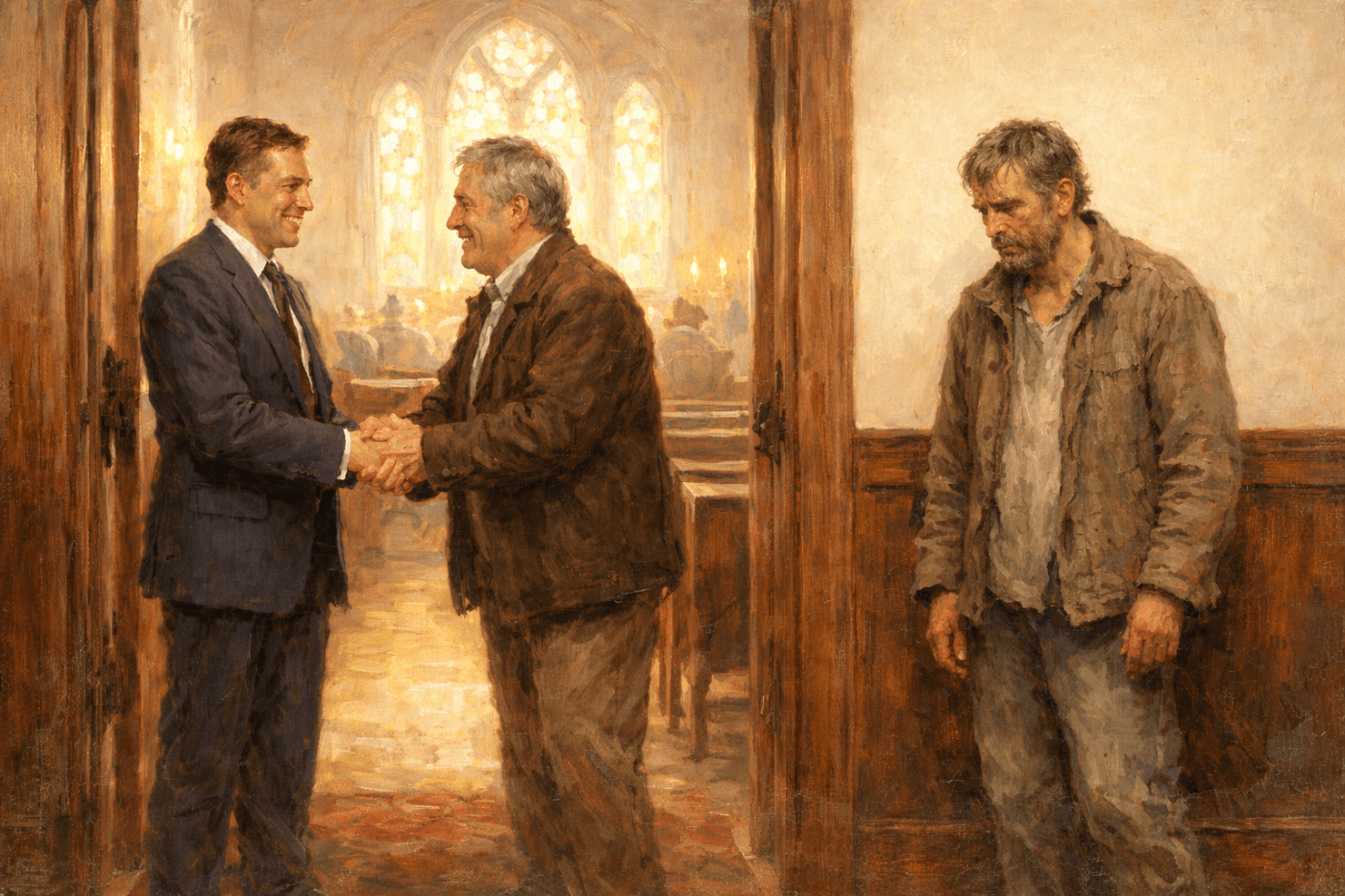
James 2 puts it plainly and a little uncomfortably. A man walks into the gathering dressed well and gets the good seat, the warm welcome, the attention. Another man walks in wearing worn-out clothes and gets the sideways glance or, worse, no glance at all. James calls this what it is: partiality. It has no place in the family of God. A church that operates this way isn’t a house of prayer. It’s a social club with a cross on the wall. Jesus said as much in Mark 11:17.
Here’s what made Judah’s corruption so devastating. It ran all the way through, from the priests and prophets down to the average person on the street, and nobody seemed troubled by it. They had grown so comfortable with the way things were that sin had simply become normal. When that kind of blindness sets in, it’s always the poor and the powerless who pay the price. They get overlooked, used, and hurt quietly while everyone else moves on.
But God was not moving on. He never does. James 1:27 reminds us that genuine faith shows up in how we treat the vulnerable. And Galatians 6:7-8 is a steady, sober word: we reap what we sow. God always knows what is happening. He hears the cries of the ones nobody else is listening to. He is the final judge, and all of us will give an account to him.
So the question worth sitting with this week is a simple one. What does our faith actually look like when nobody is watching, when there’s nothing to gain, when the person in front of us can offer us nothing? That’s where the real heart shows itself. And that’s exactly where God is looking.

 Central Haywood Church of Christ