1 Corinthians 15:12–24
A historian I read about spent two years trying to disprove the resurrection. He was not a believer, he was a skeptic, and he approached the accounts of Easter the way a detective approaches a crime scene: looking for inconsistencies, alternate explanations, reasons to dismiss. He catalogued the evidence on both sides. He interviewed scholars. He traced the manuscript traditions.
Two years later, he had not disproved it. He had, instead, found his objections answered one by one, until what remained was a historical event he could not explain away. He became a Christian not by feeling but by following the evidence where it led.
Paul made the same kind of argument to the Corinthian church. Some believers there had begun to doubt whether resurrection was real, perhaps, like many in the Greek world, they found a bodily resurrection philosophically distasteful. Paul responded with bracing logic: if there is no resurrection, then Christ was not raised. And if Christ was not raised, then your faith is empty, your sins are unforgiven, and those who have died in Jesus are simply gone (1 Corinthians 15:17–18, ESV).
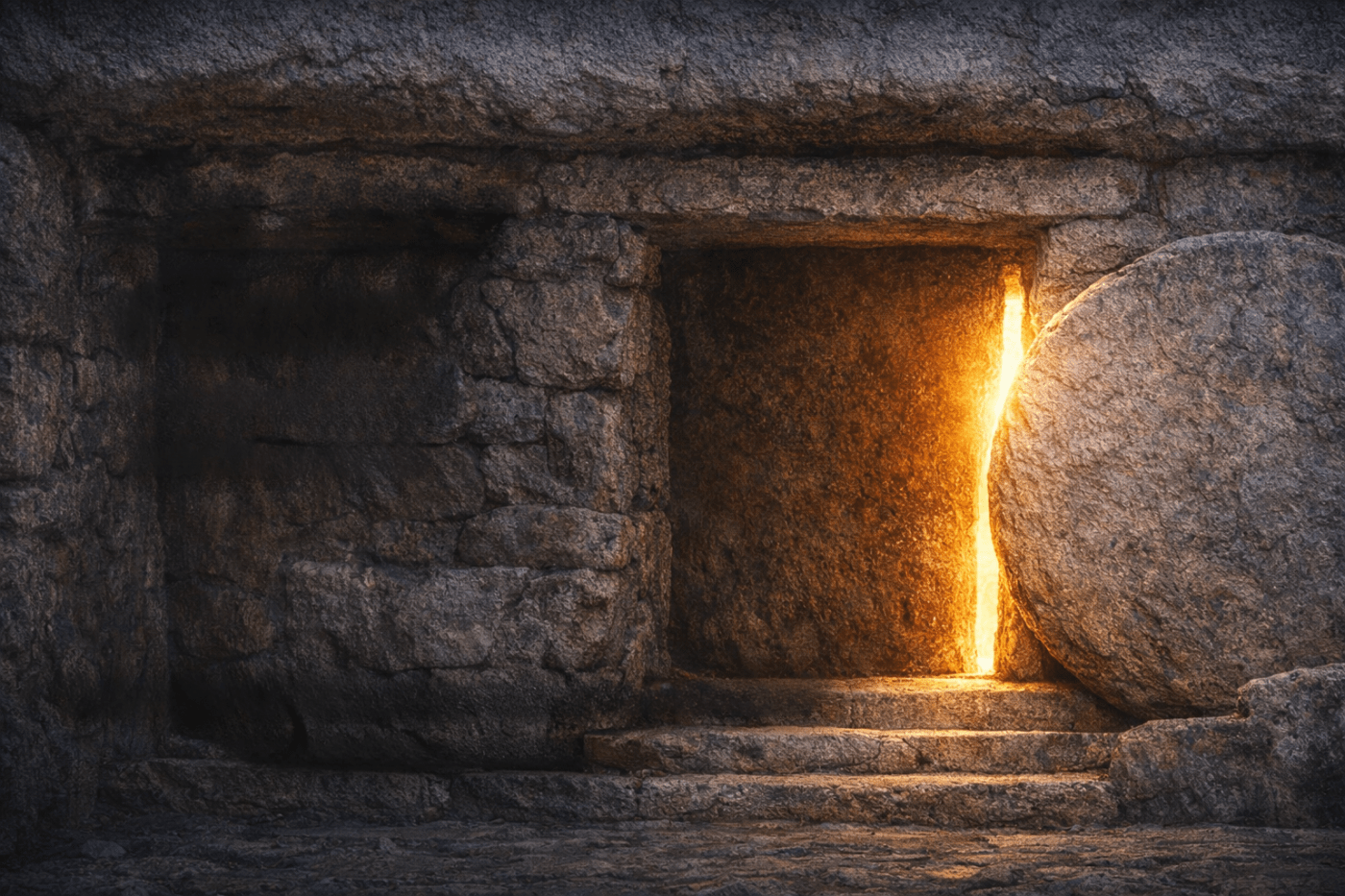
He did not soften this. The resurrection is not decorative to Christianity. It is load bearing. Everything hangs on it. If the tomb is still occupied, the whole structure collapses. What Christ has been raised from the dead means is not a footnote to the faith. It is the foundation.
But, and this is the word that changes everything, “But in fact Christ has been raised from the dead” (1 Corinthians 15:20, ESV). The verb is perfect tense: a past event with ongoing, permanent effect. He rose, and He remains risen. Death has been defeated, not in theory but in fact, in history, in a garden outside Jerusalem on a Sunday morning.
This Good Friday, we pause at the cross, not because the story ends there, but because it can’t be skipped. The resurrection is glorious precisely because the death was real. He carried what we could not carry, so that we might live what we could not live on our own.
What doubts have you carried about the resurrection? How would your daily life look different if you lived as though Christ’s resurrection were the most certain fact in your world?
Risen Christ, thank You for dying a death that was real so that You could offer a life that is eternal. I choose today to build everything on the truth of an empty tomb.

 Central Haywood Church of Christ