As a new year begins, we do not all step into it the same way. Some of us come hopeful and eager, ready for a fresh start. Others arrive cautiously, carrying disappointments from the year behind us. Some are grieving. Some are tired. Some are quietly wondering if they have the strength to face whatever comes next. God meets us in all of those places, and it is there that our confidence must begin.
Continue reading “This Can Be Your Best Year Yet”Read: Isaiah 32-37
Today’s Passage: Isaiah 35:4
The headlines assault us daily with an unrelenting stream of troubling news—terrorism, economic instability, natural disasters, and wars. Each story can fill believers with fear and anxiety, draining us emotionally until we wonder if anything good remains in this world. Yet amid this uncertainty, Isaiah 32-37 offers a powerful reminder of God’s faithfulness and protection.
Throughout these chapters, Isaiah presents a beautiful contrast: the promise of Christ’s coming kingdom (Isaiah 32:1-8, 15-20) and the Lord’s assurance of victory over our enemies (Isaiah 33:5-6, 21-22; 34:8; 35:4, 10; 37:5-7, 22-35). The central message rings clear in Isaiah 35:4: ‘Say to those who have an anxious heart, “Be strong; fear not! Behold, your God will come with vengeance, with the recompense of God. He will come and save you.”‘ This verse encourages believers to stand firm in God’s power during difficult times.
This assurance isn’t a generic promise for everyone—Isaiah is speaking directly to believers. For those who trust in the Lord, fear doesn’t have to be our default response. We don’t need to sit around worrying, allowing anxiety to rob us of joy. The reason is beautifully simple: He is our God. As Isaiah 59:19 reminds us, ‘When the enemy comes in like a flood, the Spirit of the LORD will lift a standard against him.’ This assurance helps believers stand firm and trust in God’s protection.
When we genuinely believe in the Lord, nothing can defeat us. Through obedience comes the victory that Jesus won on the cross. We are His adopted children, and He will defend us. Romans 8:31 asks the rhetorical question that should settle our hearts: “If God is for us, who can be against us?”
However, this promise doesn’t mean life will be easy. If Jesus is our example—and He faced tremendous hardship—we can expect struggles too. We’re engaged in a daily battle against the world, the flesh, and Satan. Each seeks to defeat us and hinder our walk with the Lord.
Fear is one of Satan’s most effective weapons, and he wields it with precision. When we doubt God’s power, give in to worry, or forget what the Lord has done, the enemy gains a foothold in our lives. But we must not accept fear into our hearts when the Lord is just one prayer away. Remember: fear is the opposite of faith.
As 2 Timothy 1:7 declares, “God gave us a spirit not of fear but of power and love and self-control.” In these uncertain times, let us cling to God’s promises in Isaiah, standing firm in faith rather than cowering in fear. When fear rises, turn in prayer and cling to the promises of God (Isa. 35:4) so that our hearts are reminded of who our God is.
1 Corinthians 10:31 – “So, whether you eat or drink, or whatever you do, do all to the glory of God.” (ESV)
Many Christians wrestle with what to do about Halloween. For some, it’s a harmless night of candy, costumes, and community. For others, it feels like a celebration of darkness and evil. It’s easy to see why opinions vary—Halloween’s history is tangled. Its roots include pagan harvest festivals and later Christian observances like All Saints’ Day. Yet, over the centuries, it has evolved into a cultural event rather than a spiritual one. The question we must ask isn’t merely “Where did it come from?” but “What do we make of it now?”
Continue reading “Redeeming Halloween”Psalm 34:18
“The Lord is near to the brokenhearted and saves the crushed in spirit.”
Few wounds cut as deeply as losing a loved one to suicide. It leaves behind unanswered questions, lingering guilt, and a silence that seems impossible to fill. Even the strongest faith can feel shaken in the wake of such tragedy. Yet it’s often in these dark valleys that the quiet presence of God becomes most real. Scripture does not hide from grief—it meets us there.
Continue reading “Finding Hope After the Unthinkable”Psalm 143:8
Early mornings often hold a unique stillness—a quiet invitation to draw near to God before the day’s busyness begins. Imagine Jesus rising before dawn to seek solitary communion with His Father (Mark 1:35). His life was filled with needs, crowds, and ministry demands, yet prayer was His anchor—a way to begin, not just react to, the challenges ahead (Luke 5:16).
Continue reading “A New Day, A New Prayer”Read: Isaiah 15-21
Today’s Passage: Isaiah 19:1–2
At one time, Egypt was one of the greatest powers on earth. The armies of Pharaoh were feared and respected across the ancient world. They were strong not only in battle but also in trade and wealth. Egypt became a symbol of human pride—mighty, organized, and confident in its own strength. Yet Isaiah’s prophecy reminds us that even the most powerful nations fall when they set themselves against God.
God told Abraham that He would bless those who blessed him and curse those who cursed him (Genesis 12:3). This promise extended through Israel’s history and applies still to all who align themselves either for or against God’s purposes. In Isaiah 15–21, we read a series of judgments on surrounding nations—Moab, Damascus, Ethiopia, Egypt, Babylon, Edom, and Arabia. Each of these nations had opposed God’s people in some way and would face His righteous judgment.
Egypt’s relationship with God had always been complicated. During Joseph’s lifetime, Egypt was a place of refuge and provision. God used Joseph to preserve both Egypt and Israel during famine. But as time passed, a new Pharaoh arose who “did not know Joseph” (Exodus 1:8). Fearing the growing number of Israelites, he enslaved them, turning a nation once associated with blessing into one marked by oppression. When Moses came as God’s deliverer, Pharaoh’s pride brought Egypt to ruin. The Red Sea swallowed their army, and the great power of the world was crippled for generations.
Throughout history, Egypt had many opportunities to recognize God’s authority. They had witnessed the faith of Abraham, Isaac, Jacob, Joseph, and Moses. At times, they even showed belief in God—but it never lasted. Their hearts always turned back to worldly security, trusting in wealth, wisdom, and military power rather than in the Lord. Jesus warned about this very mindset when He said, “Do not seek what you are to eat and what you are to drink, nor be worried… instead, seek His kingdom, and these things will be added to you” (Luke 12:29–31).
Egypt’s downfall still stands as a warning of what happens when people reject God and harm His own. Human pride, no matter how mighty it appears, cannot stand against the purposes of heaven. As Paul reminds us, “Behold, now is the favorable time; behold, now is the day of salvation” (2 Corinthians 6:2).
Let Egypt’s story warn and encourage us: blessings come through humility and obedience, but judgment follows when we exalt ourselves above God.
Read: Ecclesiastes 9-12
Today’s Passage: Ecclesiastes 11:5
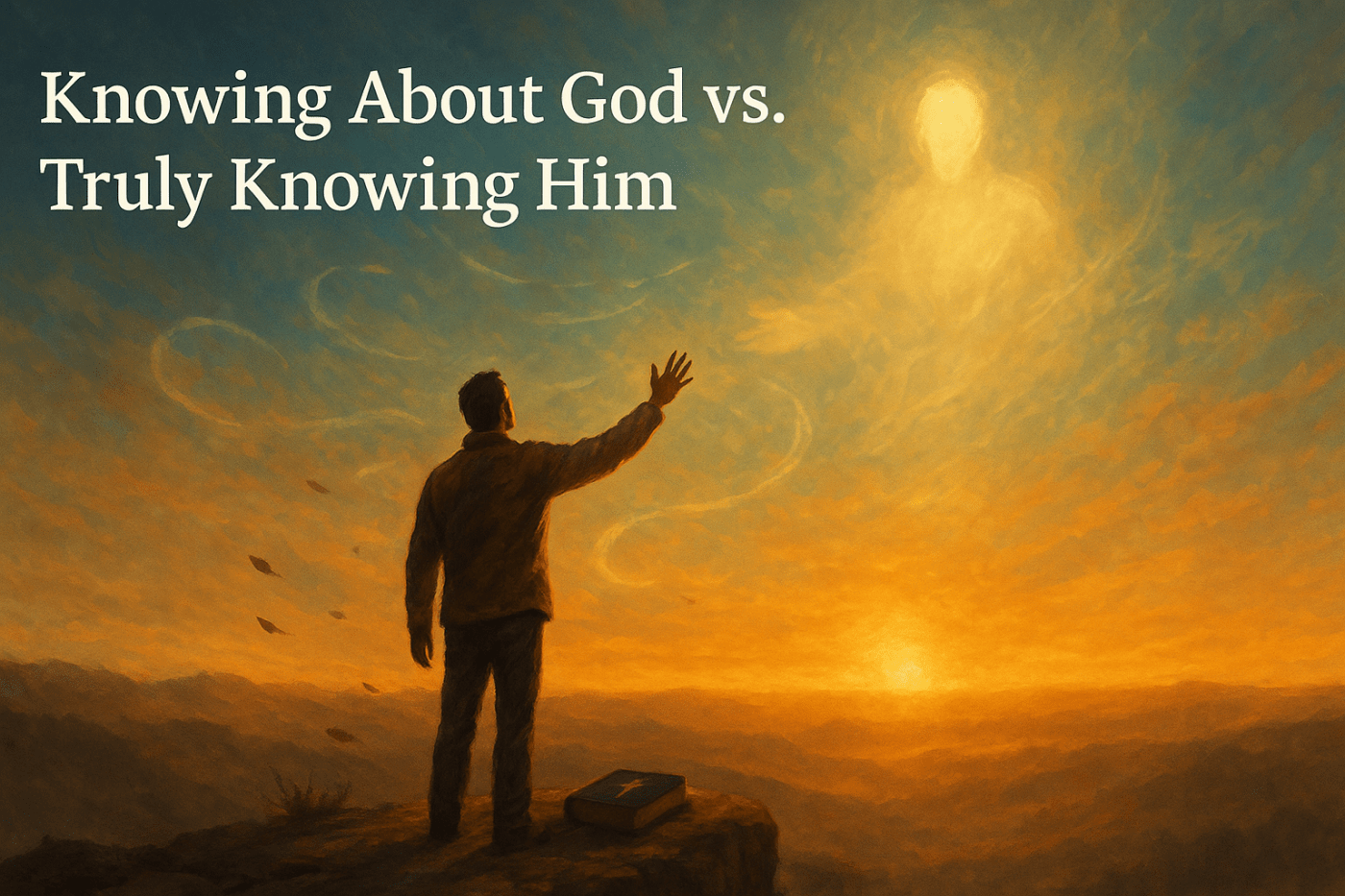
Often, we believe that what we know about life, the world, and even God is complete and absolute. Some even try to explain the nature of God as if they have Him all figured out. Even worse, some try to dictate what God will and will not do based simply on what makes sense to them. The truth is, we do not know God or the mind of God apart from He tells us. Scripture teaches that we cannot fully comprehend God or His ways. As Isaiah 55:8 says, “For my thoughts are not your thoughts, neither are your ways my ways, declares the Lord.”
Continue reading “Knowing About God vs. Truly Knowing Him”Read: Ecclesiastes 5-8
Today’s Passage: Ecclesiastes 5:15
People live for many different things. Throughout life, we are constantly encouraged to set goals and make plans. People form dreams and work tirelessly to see them fulfilled. For some, life is about climbing the ladder of success, achieving recognition, and leaving behind a legacy. Others focus on providing for their families or finding happiness through fun and leisure. These pursuits can give temporary satisfaction, but Solomon reminds us that ultimately, all earthly things fade away.
Continue reading “What Are You Living For?”Read: Ecclesiastes 1-4.
Today’s Passage: Ecclesiastes 4:9–12
“Two are better than one, because they have a good reward for their toil. For if they fall, one will lift up his fellow. But woe to him who is alone when he falls and has not another to lift him up! Again, if two lie together, they keep warm, but how can one keep warm alone? And though a man might prevail against one who is alone, two will withstand him—a threefold cord is not quickly broken.”
Continue reading “Stronger Together”When you look around, it’s clear: people are carrying heavy burdens. Some struggles are new to our generation, while others are as old as mankind. From a Christian perspective, these struggles remind us that the world is broken, but Christ offers hope and healing.
Continue reading “What Are People Struggling With Today?”Read: Prov. 27–31
Today’s Passage: Proverbs 30:5–6
This passage is more than a statement about the Word of God—it’s a reminder of where we place our trust. It speaks to our confidence in God’s truthfulness, His trustworthiness, and His care for those who cling to His Word. When we open the Bible, we’re not just reading ink on a page; we are encountering the very heart of God—His revealed will and His promises that have never failed. From Genesis to Revelation, every word is intentional and carries His divine authority.
Continue reading “Every Word of God Is Pure”Read: Proverbs 23–26
Today’s Passage: Proverbs 25:9–10
The book of Proverbs continues with valuable insights from the wise. In chapters 23 and 24, we find the thirty sayings of the wise (Prov. 23:1–24:22), including a strong warning about the problems of too much wine (Prov. 23:29–35). Proverbs 24:23–34 offers more sayings of the wise, and chapters 25–26 contain additional proverbs compiled by the men of Hezekiah from the wisdom of Solomon (Prov. 25:1–26:28).
Continue reading “Guarding Against Gossip”Read: Proverbs 20-22.
Today’s Passage: Proverbs 22:28.
“Do not move the ancient landmark that your fathers have set.” (ESV)
This brief verse from Proverbs carries more weight than it might first seem. In its original context, it refers to the physical boundaries of land and inheritance—borders that marked the possession of families and tribes. These boundaries were sacred, often set generations before and intended to remain fixed. Moving them was not only dishonest but a serious crime (see Deut. 27:17).
Continue reading “Do Not Move the Ancient Landmarks”Read: Proverbs 16–19
Today’s Passage: Proverbs 19:17
“Whoever is generous to the poor lends to the Lord, and He will repay him for his deed.” – Proverbs 19:17 (ESV)
As believers, we are called to help those who are less fortunate than ourselves. This is not a minor suggestion in Scripture, it’s a repeated and consistent theme. From the Law and the Prophets to the teachings of Jesus and the early church, we are reminded that caring for the poor reflects the heart of God. Giving to the needy isn’t just an act of charity; it’s part of what it means to live a Christ-like life.
Continue reading “Called to Serve the Needy”Read: Prov. 12-15
Today’s Passage: Prov. 12:22
Church, as we this week’s reading, we find a wealth of practical wisdom for everyday life. These chapters help us discern what is good, what is harmful, and how we can live in a way that honors God. Today, let’s focus on one key truth that Proverbs 12:22 touches on: the lasting impact of our words.
Continue reading “The Lasting Impact of Our Words”